
Fuel contamination
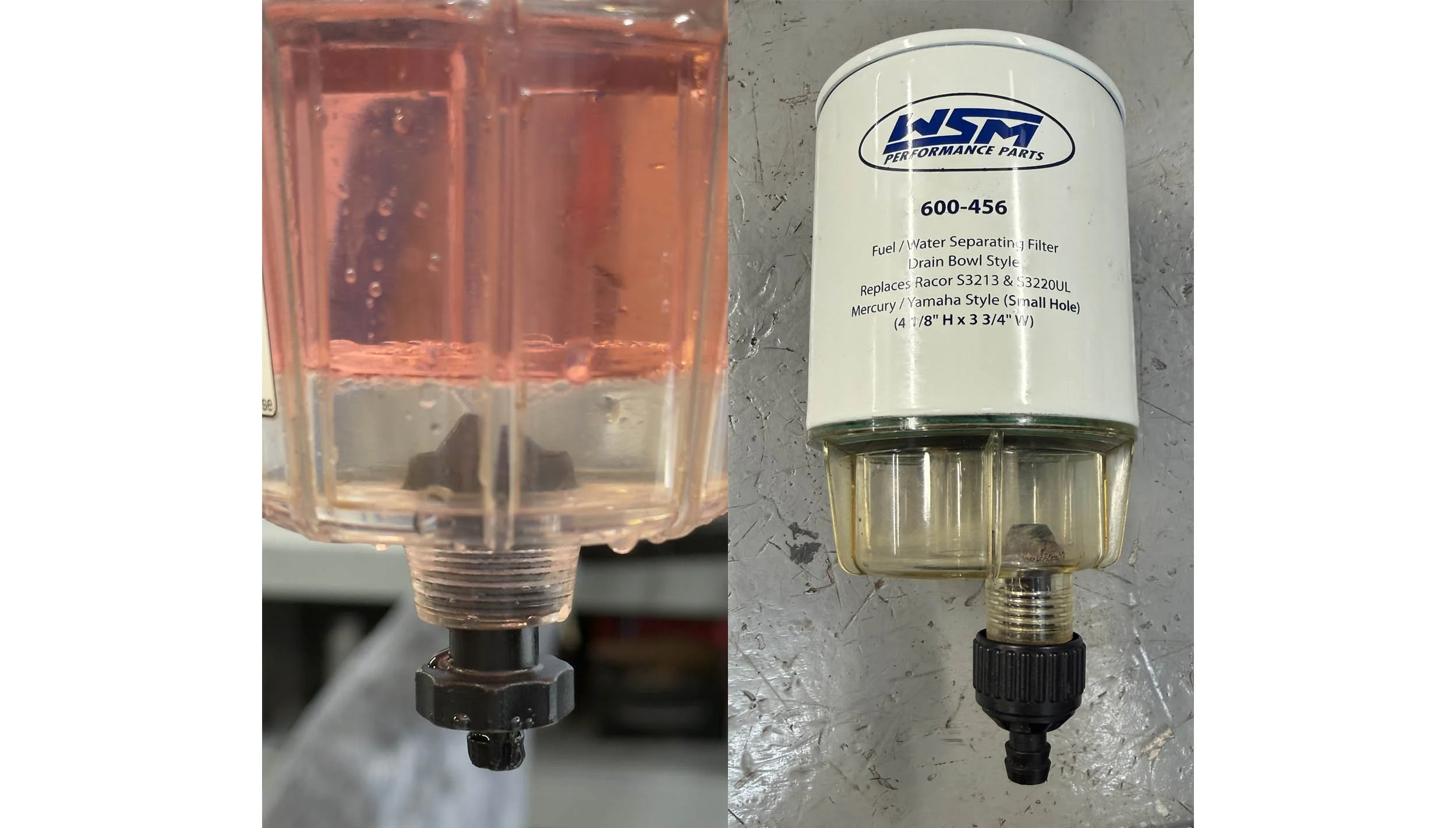
Fuel contaminated with water and filter unit.
Fuel for Thought:
We’ve all been there. You’re at the boat ramp, the sun is shining, and your outboard is deciding whether or not you’re actually going boating today. You pull the cover off and gaze hopefully at the engine, wondering if it’s the spark plugs or something more sinister.
More often than not, the solution is much simpler: fuel contamination. A compromised fuel supply can play havoc with your engine, causing everything from intermittent stalling and "running rough", to high fuel consumption, or a total refusal to start.
If you’re having engine trouble, fuel quality is one of the first things we investigate.
1. Water Contamination:
Water in the fuel is a common headache. Usually, this is freshwater caused by condensation. When fuel sits in a tank, daytime heat can cause it to "sweat," and cooler evening temperatures turn that moisture into water droplets. The water is then separated from the fuel contaminating it. The water is heavier than fuel so sinks to the bottom of the tank and when you go to start it is the first thing to hit your engine, hence the spluttering or if there is a lot of water, it just won’t start.
Water can also access the fuel system other ways, such as a perished seal or a leaking fuel cap.
The Fix: We recommend installing a high-quality marine fuel filter between the tank and the engine. The best models feature a clear "sight bowl" at the bottom, allowing you to see water collecting below the fuel. These are not hugely expensive and for the peace of mind they are worth every cent.
The Benefit: Not only are you able to see the issue, but these filters allow you to drain the water out quickly, getting your engine back to a smooth hum. For the small cost and for the peace of mind these are worth every cent, and we recommend them to all our customers.
As long as the water hasn't been sitting for months (or mixed with saltwater), it typically won't damage your fuel pumps or seals. While your engine might cough and sputter as it draws that moisture through, it’s usually temporary. However, if the contamination is severe, you will see the clear slight bulb filling up more quickly than usual and it might be time to call in the mechanics
2. Stale Fuel: The Sticky Truth
If a boat sits unused for a few months, the fuel begins to evaporate. Beyond the condensation issues mentioned above, the fuel left behind becomes a sticky, varnish-like residue. Over time, this "gum" clogs fuel lines, filters, and injectors.
The Fix: Run your engine every 6 – 8 weeks for at least 10–20 minutes. This keeps the fuel moving and prevents it from settling and separating.
Symptoms to Watch For
If your engine is struggling with fuel-related issues, keep an eye out for these red flags:
Rough Idling: The engine feels shaky or inconsistent when stationary.
Difficulty Starting: Especially common if water has settled at the bottom of the tank overnight
Loss of Power: The engine hesitates during acceleration.
Reduced Fuel Economy: As combustion becomes less efficient, the engine burns more fuel just to maintain performance.
The Best Defence is Prevention
Ultimately, prevention is your most reliable tool. Prioritizing the installation of a high-quality filtration system and then keeping a watchful eye on your fuel-water separator ensures that impurities are caught long before they cause performance issues or internal damage.
Beyond filtration, replacing your filters annually and avoiding letting fuel sit stagnant in your tanks for long periods will go a long way in preventing small issues from turning into expensive repairs. It’s a small investment in time and maintenance that pays dividends in engine longevity and peace of mind.
A little vigilance today ensures a reliable start every time you hit the ramp.